Album review: U2, "Carnaval de Luz"
Shhhhhhhhh.

Where are we now, where are we going, what do we still have to do, what are we doing next? What needs to be different, what needs to change, what is fine the way it is? These are all of the questions that I believe U2 are trying to answer with Carnaval de Luz, their 16th studio release, out today. It is an album of taking stock, of reflection, of regrouping themselves yet again. It is an album of stories, of dreams, of retrospection, of reflection. It is not an album of Big Statements but that does not mean it is trivial. It is also not a record with a large and obvious thematic throughline, unlike its immediate full-album predecessors — and that is fine. It is a positive.
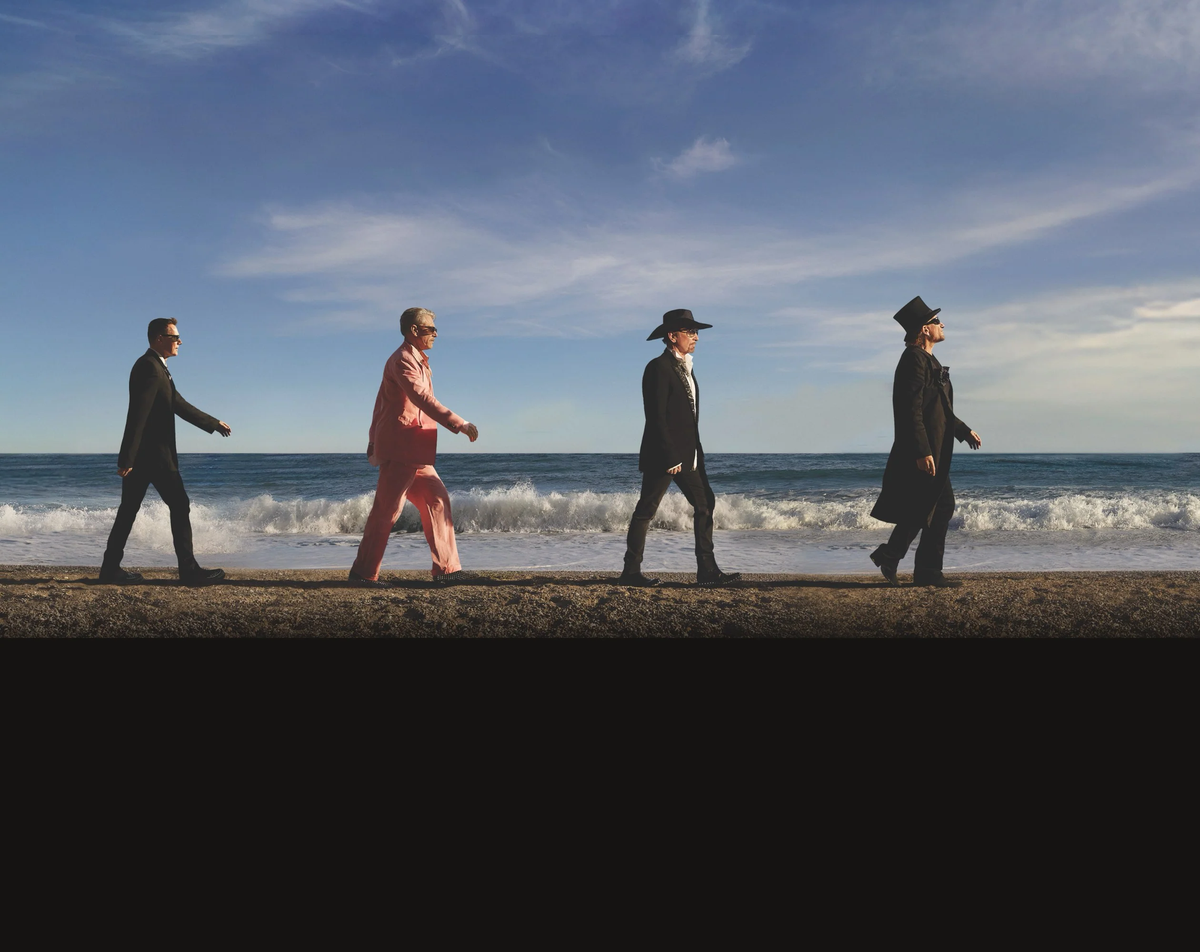
It has been 50 years of U2. This is a rock and roll band that is still intact, by the grace of the universe: they’ve almost lost (either figuratively, spiritually or literally) three of the four members over the course of their existence. (It is not the first post-surgery recording with Larry Mullen Jr. but it is the first official album.) They have grown up in public. The album cover outfits look like someone was rummaging in the trunk of the mirrorball lemon from the POP tour: the ringmaster, the gunslinger, the playboy, the… ninja. Dressing up, shape-shifting, temporarily becoming someone else, is an essential part of carnival. They could be on their way to the party, or they could be on their way home the morning after. They are walking on the beach immediately adjacent to a large body of water and a visible horizon, all of which are repeat elements of U2 iconography. The sea engulfs, it erases, it cleanses. The horizon represents infinity, aspiration, something to reach for.
The members of u2 are my contemporaries from an age perspective, and that matters because despite being born on opposite sides of the pond, we carry the same lineage of influences: they write songs about Joey Ramone, they invite Lou Reed and Patti Smith onstage, the liner notes invoke finding God (with the capital “G”) at a Bruce Springsteen show. We are compatriots of the same nation-state, which is why I always find myself drawn back while at the same time being repelled at the enormity of the Machine around U2.
 Caryn Rose

This discussion is only about Carnaval de Luz and is not taking into account music outside of that project that has been released recently and has a spiritual or thematic connection to this project, n.b.. Days of Ash or Easter Lily EPs. We are still operating within the shape of a record album, of a specific collection of songs, as outdated as it may be in 2026. U2 could have absolutely made the decision to release it all as a double album, but they did not do that so for now we are letting them exist in their own delineated spaces. (I wrote about Days of Ash but not Easter Lily.) They are adjacent, they are part of the story — they are referenced many times in the liner notes — but drafting the map where they connect and why is not part of this particular discussion.
Those two EPs came out when they did because those songs were topical and timely and could not wait. Those are the records that have “American Obituary” and “Song for Hal” (Wilner). There’s a quote from producer Jacknife Lee in the revived Propaganda where he explains that they all came to the conclusion that “The album is not the work, for now. The work is about reacting to events in real time. Rock ‘n’ roll doesn’t do that often anymore.”
Carnaval de Luz is less reactive but it is not less timely. It is also less obvious, and musically and lyrically this band does its best work when they are not trying so hard. It is not 100% but it is close. It is flawed in the way U2 often go astray, but those flaws are their superpower, their willingness to try and fail in front of everyone. But this is a record about the light, not the darkness.
It’s also a record that reveals itself to you over time, over multiple listens. The initial listens were challenging. I wasn’t sure I liked it, I wasn’t sure it was interesting, I wasn’t sure it was good enough, I reacted negatively to what felt like gimmicks. The aspects that will make a record immediately accessible to the casual listener lose their sheen with careful attention — or even not so careful, just that simple act of listening with intention. Not multi-tasking in 2026 is a radical act.
While we're talking about production, this is the record where I am fully onboard the Jacknife Lee train. I think here especially he is letting U2 be U2 and while there are some small elements throughout that I don't think are necessary to realize the compositions, it's not the 'put a round peg into a square hole' kinds of errors that I tend to blame on Ryan Tedder (who I realize has a partial production credit on "Silencio" but Steve Lillywhite mixed it!) The record genuinely sounds great from a technical perspective; you can hear everything you want to hear in the proportions that make sense for each element.
Opening your album with a song titled “Go” (with ‘Carnaval de Luz’ as a subtitle, a parenthetical) is a dare, it is a poke, it is a statement of intent. U2 have an astonishing track record with opening songs on their albums (go look!). But this one surprises you because the first sounds feel more like a mistake, like feedback, like level-setting, and then it builds and explodes.
It’s the same kind of building tension and energy that wouldn’t be out of place at the intro of a Rage Against The Machine song before it stops and drops into what absolutely sounds and feels like the chaos, heat and energy of any celebration within the tradition of carnival, that expression of abandon before heading into that period of renunciation and repentance, whatever it’s called wherever it is happening.
You don’t get to the carnival part until the chorus, which switches time signatures and rhythms while still keeping us inside rock and roll — that’s not meant as a value judgement, just a reminder that U2 are still a rock and roll band. Brian Eno shares composition credit for the music and plays keyboards, and you hear his influence all over the place, those opening blips, the psychotic, psychedelic carousel sounds. Bono isn’t singing so much as chanting, it’s a narration of the action until the chorus, when there are multi-tracked choruses and Edge riffing in the background.
“I came to find the other people who feel like this” is carnival and it is also No Kings and the streets of Minneapolis. Listen for Adam Clayton’s majestic bass run right before the final chorus, before the serrated edges of Edge’s (sorry that wasn’t intentional) guitar run. All of it is noisy, a little chaotic, a little disarranged, but also executed with precision. If it’s not a show opener I’m curious what is.
365427 is a a hex color.

“La Reina” is stronger musically than it is lyrically. It’s about as boilerplate U2 as you get but that is not a bad thing, there are just certain places they go sonically (to paraphrase Edge in the Zane Lowe interview) and there is always a level of comfort in hearing certain elements put together in a particular way that you know can only derive from one artist or a combination of artists. That martial, ringing intro downshifts and then absolutely swings when it moves into the verses.
Let's hear it one more time / For the face of the future
This isn’t the first or second song U2 have written about women being the future, they talk the talk and try to walk the walk, they’re not doing it in a subtle way but if they thought they could be subtle about this subject it would be because things had improved for 50% of the world’s population. But it will be amazing energetically in a football stadium, you can close your eyes and see the pitch bouncing. It’s got this great Edge-ian elasticity, and then there’s that descending chord run right before the bridge that downshifts the energy beautifully. There’s a truly fabulous rawness to how the guitar is processed here, and the rhythm section is heavy on this song and this record in general in a way it hasn’t been on a U2 record in a while. Bono’s voice gets to soar here and he’s in fantastic voice throughout the record.
I kept hoping that “Street of Dreams,” the first single, would either grow on me or eventually feel less like a soda commercial, but it has not done so after almost two dozen attempts. I will be the first to acknowledge that this melody is bullet-proof and will not leave your brain, which is probably why it feels like an advertisement. It’s too crisp, too tidy, too literal. I accept that part of genuinely being a fan of this band means that you have to embrace their relentless earnestness. It opens with some interesting texture and then the guitar snakes in and I’m waiting for a corporate logo.
This bus?
(Gonna ride it)
This is “Shiny Happy People.”
While agonizing over how I felt about “Street of Dreams,” I was chatting with a U2 superfan pal about what alternate, maybe acoustic versions of this could sound like and if it would redeem the track. She said, “It reminded me when out of nowhere they did this extraordinary ‘Ordinary Love’ at the Oscars and (Steve) Lillywhite went on socials to holler about how that should’ve been the release, lol.” I eagerly await the redemption of “Street of Dreams” in this fashion.
On the subject of relentless earnestness is “The Mirror Maker (Rosalía),” a song inspired by and dedicated to the Catalan singer who has become a flavor of the month in the English-speaking world despite having existed and been successful for almost a decade. I love that when U2 told her about it, she asked if she had to sing on it.
The actual composition is fine. The guitar is vaguely flamenco, referencing Rosalía’s musical fusion. The bassline is elemental, there’s some interesting syncopation leading up to the choruses, and the drum sound coming out of the bridge is fantastic. And the bridge itself is the best part of the song:
When I was in that hall of mirrors
I could only see my own face
You can hate yourself, but I let it pass
I didn’t know what you know
In case of an emergency break the glass
In case of an emergency break the glass
And go through the mirror
Bono does some fancy footwork in the Zane Lowe interview about the metaphor of the mirror on the record, and how the song is about what she taught him, but i think this song makes the cut is because that is about the lead singer.
For a while I took the position that this song is redundant with “La Reina” — not that there’s a quota of how many songs on a record can be about women and their influence, but I didn’t think this was a strong enough track to have made the record. But I believe that it’s here for a larger reason, which is tied to why the band who on the regular made fun of their inability to sing in Spanish is writing and singing in Spanish and Portuguese on this record: it’s not that they’re pandering to their incredibly large fanbase in Mexico and South America, it’s an attempt to acknowledge and elevate non-Anglocentric culture. (The fact that they’re opening the tour in Mexico and South America before moving on to Europe underscores this.)
Neither the members of U2 nor their fans for whom English is not their primary language need to be educated on how rock and roll managed to successfully infiltrate and offer freedom and revolution just as it is. But I think it’s a small, subtle, reasonable gesture, even if it comes across a little less elegantly than I think they would have liked.
 Caryn Rose
“Superficiality” is a prime example of how the songs on this record expand upon themselves. It’s a little cloying, a little precious, but the more you listen to it, the more you’ll appreciate the skill behind the vocal delivery, it will emerge and show itself, the elasticity of Bono’s voice is the star here. And side one closes with “If The World Is At War We Better Not Be,” and we’re back at Mount Temple, where Alison Stewart is telling her boyfriend that he doesn’t have to write a great song, he just has to write a song (as he told the story on the last tour).
You can’t tell them “don’t write about your origins” because the U2 origin story is 100% some kind of miracle — again, the Zane Lowe interview, if you haven’t seen it, is well worth your time — they have been doing this for 50 years, the same four people survived and stayed together and managed to make it work. But the song only starts there, it is about friendships, it is about living a life, it is a grateful reflection (there’s a mirror in here too) and meditation of the journey. It’s an exemplary vocal performance, a delicate musical background manifesting around it, supporting it. I don’t love the double-tracked, quasi-auto-tuned sounding vox on the choruses, but it’s momentary. It’s a quiet way to end side one.
In the silence the devil rock and rolls / Silencio! At first, you’re going to roll your eyes and say, “It’s ‘Vertigo’. It’s just ‘Vertigo.’ It’s even another word that ends with an ‘o’!” But it is much much cleverer than that, but that won’t hit you until about the fourth listen. I have gotten aggravated in the past over the band’s habit of invoking Joey Ramone’s name and yet not showing us, not demonstrating what they say they have learned, and I’m not alleging that they’re fronting, just that sometimes it gets buried under the infrastructure.
But here it is! Listen to the slashing guitar chords, listen to the bass line, listen to the crispness and the precision. The bass line is RIGHTEOUS. The Edge’s solo will have you spinning around the room, crowing “SILENCIO.” The wordplay is clever, the editing of the lyrics down to the barest essentials, the timing, the delivery, the sequencing — in the verses, the Edge isn’t echoing on each line, it’s every other line, and it’s the quietest, most low-key profession of faith:
There's a quiet where a baby doesn't cry (tranquilo)
There's a hush where a mother might sigh
Mary Mama angel offered her a choice (sereno)
“My son is listening if you got no voice”
That’s a catechism right there.
In the middle:
There's a quiet saying, "Shut your fucking mouth" (silencio)
There's a diet saying, "Spit it fucking out"
And I’ve stared at this for two weeks now and am undecided: is it “diet” as in “to eat according to prescribed rules” or is it “diet” as in “various national or provincial legislatures” because it could easily be either, and there’s no way Bono doesn’t know this.
[There are … other potential interpretations? We’re all grownups here.]
I know many U2 fans who were ecstatic over the fact that Bono says “fuck” twice but the real scorcher is in that last line before the final chorus:
Campo de Cristo de silencio (shhh)
That shhhhhh is absolutely electric. And then the Edge slides in like he’s duck-walking like Chuck Berry. When this one finally hit for me, I started looking at plane tickets to Mexico City.
Also worth mentioning that “Silencio” was the name of the nightclub in Mulholland Drive, and the Magician in the film tells the viewer that whatever transpires at Silencio is an illusion. I don’t know if that’s intentional but I don’t think it’s a stretch.
So while the tour for this record is called “The Greatest Show On Earth” — and from a band that toured with a private television station and a giant mirrorball lemon all four could fit into, demanding some kind of demureness is just stupid — this song is not a reflection of that, at all. It is the best song on the album, it is its fully beating heart. The music is by U2 and Eno and Eno is on keyboards again here. It’s also mixed by Steve Lillywhite, who has demonstrated his strong grasp of what U2 should sound like when they’re just being a rock and roll band. The guitar line at the beginning comes straight out of Hansa and the rhythm section at the start of the second verse also has its heart in Berlin.
But this song is devastating, heart-rending, deeply emotional, the choruses soar in a way that is naked and ambitious and it is truly U2 at its very best. The song opens, you’re waiting for the vocals, and there’s a pause you don’t even know is a pause until you hear Bono: “If I couldn’t sing,” is the first thing he says, and yes, he continues the sentence but there’s enough of a pause where in that moment you wonder if this is Bono considering his own mortality, of all of the very close calls — the bike accident, the heart surgery — he’s gone through in the last 10 years. He can’t play guitar any more. The pound of flesh has been exacted.
As the song continues, you hold your breath: The careful pacing, the deliberate progression, it builds carefully, sneakily, it will keep catching you by surprise, Bono’s Ohhh ohhhs at the first line of the chorus each time, an expression of desperation, exasperation, relief, pain. Adam’s bass like a heartbeat, Larry right there with him, the guitar uplifts the expression and the emotion in the vocal delivery.
Have we made God feel like a stranger here?
It’s honestly so unusual and refreshing to hear people speaking about their faith in a way that isn’t intended to impose it on others but is simply speaking about what it is like for them, what it means to them, how it reflects in their own life.
“Glorify” is a psalm but it is also a conversation, another example of Bono’s exquisite phrasing on this record. It reminds me of the way Bono refashioned the U2 songs he performed on his book tour.
But here’s another fantastic example of how the lead singer is inhabiting the material on this record. The delivery of the first verse, those pauses, the conversation that he’s having:
Can you see me?
No?
When did I disappear?
Can you hear me?
No?
What is it that you don’t want to hear?
It’s the breath and the control that elevate the song.
Your heart is breaking now in ways you never knew that it could / On a small screen you discovered not all people are good
I am somewhat devastated to learn that even Bono is not immune from stupidity on the internet. “Midnight Sunshine” sounds like light in the darkness, it’s a small pause, a respite, with a trademark U2-level chorus, notes gently sloping upward, but it’s the one that hasn’t quite revealed itself yet, or perhaps has revealed as much as there is to show. The vibe kind of reminds me of "Last Night on Earth" from Pop.
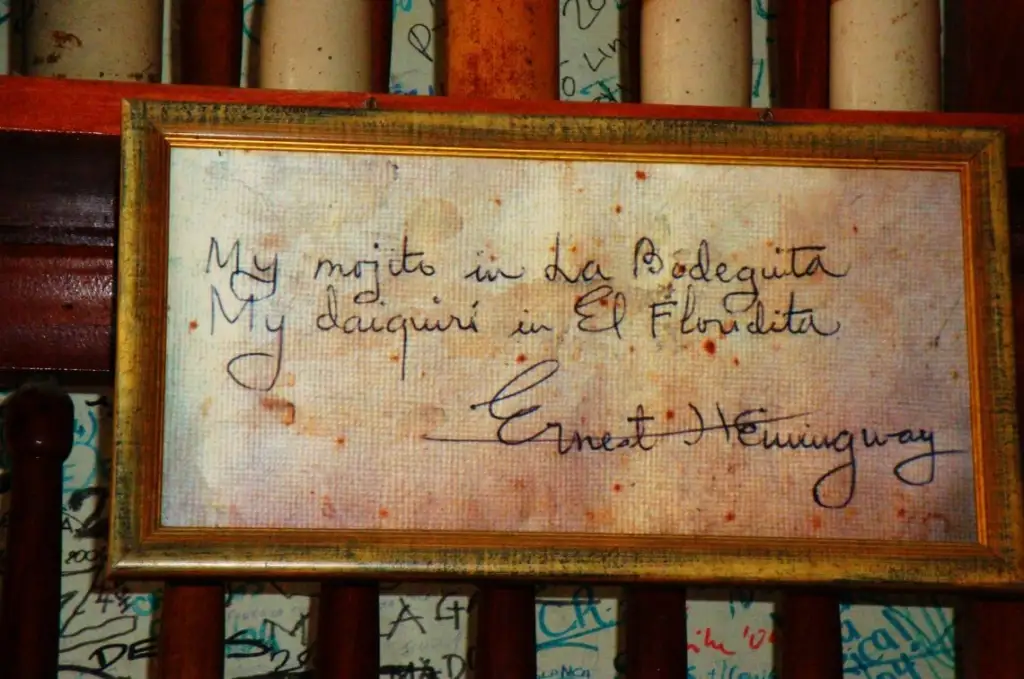
You don't have to look at the credits to hear the intro to “Can’t Stop Us Now” and know that Brian Eno is present. It’s such an Eno-esque assemblage, like an outtake that could have been given to Wim Wenders for Until The End Of The World — but that doesn’t mean it’s a carbon copy. It’s not as dark, not as jagged, not as confused; it’s a different quality of pain. Like most of the songs on Carnaval de Luz, it mixes the personal view with the global view, it is about the world, it is about smaller interpersonal encounters. We are in Cuba, following in the steps of Hemingway, or we are in a similar locale that is allowing the characters to regroup and retrench: All of us are better than any of us.
The whole experience is so perfectly, precisely constructed; the drums, the bass that’s a beat and a half behind it, the multitracked backing vox, the guitar riffs, the firefly chirps and other unearthly stringed noises. The first time I heard it I was as still as possible because I wanted to soak up the experience of hearing this for the first time. Can it close the show in a stadium? If anyone can make that happen, it’s U2.
And then we come to “Hurt,” the unfinished song that Dolly Parton gave to U2 to finish, telling them, “You can take it somewhere else and I might like to see where you could take it.” We don’t know — they didn’t know — how sick she was, when she may have decided finishing one more piece of music was better than leaving the planet with it unfinished. We are not adjudicating the hurt feelings of old elitist men who think Dolly Parton belongs to them. She belonged to the world.
My initial verdict when I heard that the song was going to be on this record, and before I heard it, was that there was no way they couldn’t include it once she left the planet. But it’s here because it is stunning. Daniel Lanois on pedal steel is always a blessing, and Bono steps up his game to deliver another fantastic vocal delivery on a record that is already full of essential vocal performances — and miraculously, despite this being a song she’d begun and gave them to finish, it absolutely fits into the themes of the record. Dolly was also a privately spiritual human, she didn’t require or need the people who listened to her music to also embrace her God and that is, again, another thing she shares with this particular group of men.
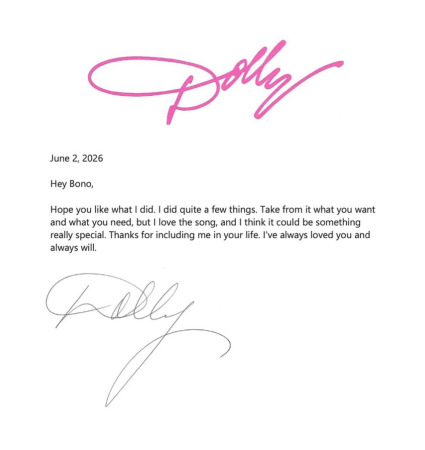
Just the idea that U2 helped another Dolly Parton lyric and performance make its way into the world matters. There are millions of music fans who might not understand why she was important or know how to find their way into her catalog, and now they might. She got out of bed to sing this. Y’all can shut up.
Shhhhhh.
NOTE: This should have been published as one of my bimonthly Salon columns and I was literally head down in the middle of deep listening when I got the news that the site was going out of business. I got to write what I wanted to write about for a year and a half and that is an eternity in modern cultural criticism. This does mean that this site will be busier again as I try to find homes for the rest of my 2026 and early 2027 editorial calendar. So please consider subscribing at either the free or paid level, or throwing some coins in the tip jar.
Disclaimer: I only watched the Zane Lowe interview because part of my process is that I rigidly ignore pre-release press because it’s how I try to ensure that my thoughts are my own and aren’t influenced subconsciously. So if there are questions I am asking here that are answered elsewhere, that’s why.
 Caryn Rose